
Resume Objective vs Resume Summary: Which One Should You Use in 2026?
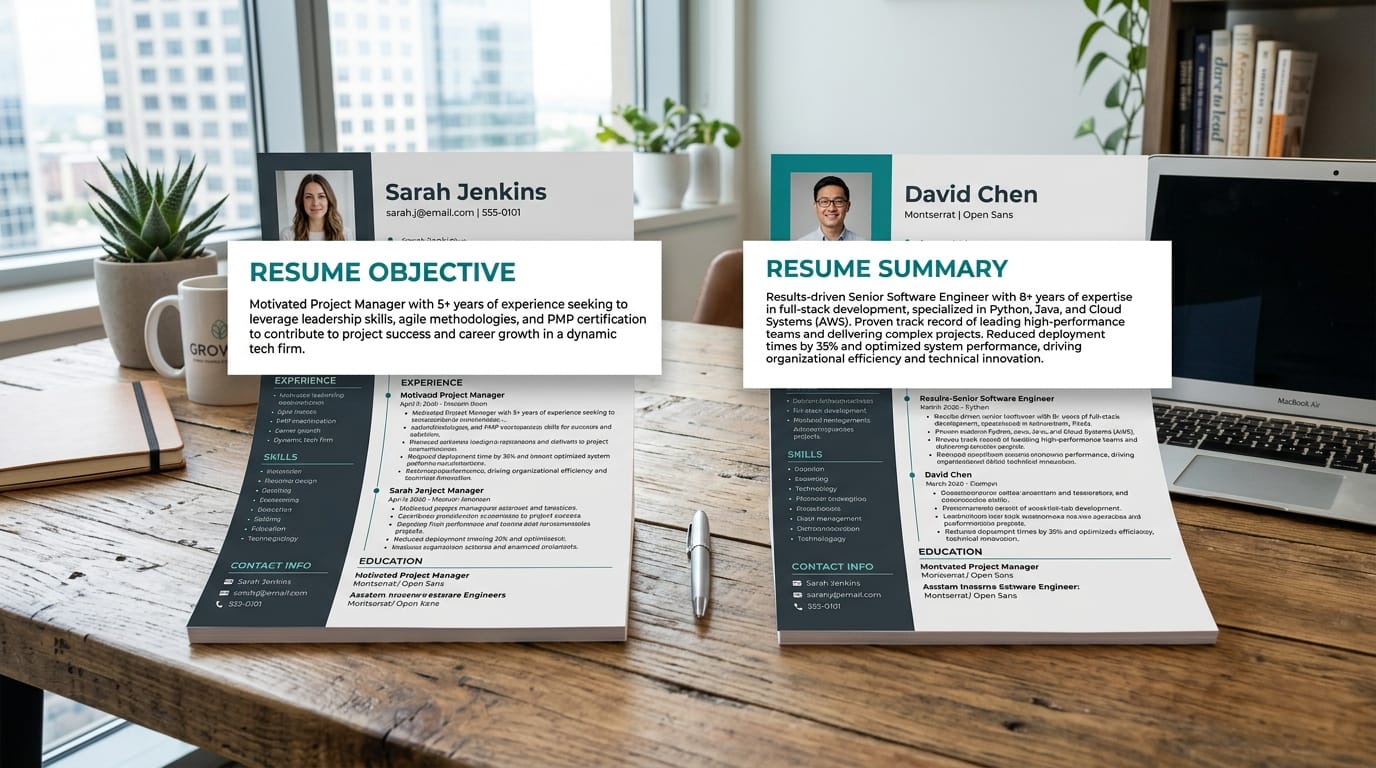
One of the most common questions job seekers ask when writing a resume is whether they should use a resume objective or a resume summary.
Both appear at the top of your resume and serve a similar purpose: introducing you to recruiters. However, they are designed for different types of candidates and career situations.
Choosing the wrong one won't necessarily ruin your chances of getting hired, but choosing the right one can help recruiters quickly understand your value and determine whether you're a good fit for the role.
In this guide, we'll break down the differences between a resume objective vs resume summary, explain when to use each, provide examples, and help you decide which option makes the most sense in 2026.
What Is a Resume Objective?
A resume objective is a short statement that explains your career goals and highlights the skills or qualities you bring to a role.
It focuses on where you want to go in your career rather than what you've already achieved.
Resume objectives are typically used by:
- Fresh graduates
- Students
- Entry-level job seekers
- Career changers
- Candidates with limited work experience
A strong resume objective tells employers:
- Who you are
- What position you're seeking
- How you can contribute to the organisation
Example:
Motivated Marketing graduate seeking a Digital Marketing Assistant role where I can apply my communication, content creation, and analytical skills to support brand growth and customer engagement.
What Is a Resume Summary?
A resume summary is a brief overview of your professional experience, achievements, and key qualifications.
Unlike a resume objective, it focuses on your track record and accomplishments.
According to The Muse's Resume Guide, a great summary should be short, punchy, and capped at around three sentences. By skipping generic fluff and leading with quantified results, like percentages, budgets, or revenue growth, experienced professionals can immediately show a recruiter the exact value they bring to the table.
Resume summaries are commonly used by:
- Experienced professionals
- Managers
- Specialists
- Senior-level candidates
A strong resume summary tells employers:
- What experience you have
- What results you've achieved
- What value you bring
Example:
Results-driven Digital Marketing Specialist with five years of experience managing SEO, paid advertising, and content marketing campaigns that increased website traffic by 65% and generated consistent lead growth.
Resume Objective vs Resume Summary: Key Differences
The simple rule:
If you're trying to show potential, use a resume objective.
If you're trying to showcase experience and results, use a resume summary.
When Should You Use a Resume Objective?
Freshers
Fresh graduates often don't have extensive work experience to summarize.
A resume objective allows them to highlight:
- Education
- Relevant skills
- Career goals
- Internship experience
According to a master resume breakdown by Coursera, leading with an objective is one of the smartest moves a recent graduate or first-time job seeker can make. It acts as a strategic introductory window, mapping out your professional goals and raw potential so clearly that a recruiter instantly understands exactly how your background fits their opening.
For freshers, a strong objective can immediately show recruiters what type of role they're pursuing.
Career Changers
Switching careers can create gaps between previous experience and new career goals.
A resume objective helps explain the transition and highlight transferable skills.
For example, a teacher moving into corporate training may use an objective to connect classroom experience with learning and development roles.
Students
Students applying for internships, part-time jobs, or graduate programs often benefit from using a resume objective.
It allows them to showcase academic achievements, projects, leadership experience, and future career aspirations.
For candidates in these categories, a resume objective often works better than a resume summary.
Read 60+ Career Objective Examples for Freshers to Beat ATS in 2026
When Should You Use a Resume Summary?
Experienced Professionals
If you have several years of experience, recruiters want to see your accomplishments.
A summary allows you to quickly highlight:
- Years of experience
- Industry expertise
- Key achievements
Managers
Leadership roles require evidence of impact.
A summary helps managers demonstrate:
- Team leadership
- Revenue growth
- Operational improvements
- Strategic achievements
Specialists
Professionals in fields such as IT, finance, engineering, healthcare, or marketing often benefit from a summary because they can showcase technical expertise and measurable results.
The more experience you have, the more valuable a resume summary becomes.
Resume Objective Examples
Marketing Fresher
Recent Marketing graduate seeking an entry-level role where I can apply content creation, social media, and communication skills to support business growth.
Computer Science Graduate
Motivated Computer Science graduate seeking a Junior Software Developer position where I can contribute programming and problem-solving skills while continuing to develop technical expertise.
Customer Service Representative
Customer-focused professional seeking an entry-level customer service role where I can use strong communication and interpersonal skills to improve customer satisfaction.
Career Changer
Experienced educator transitioning into corporate training, seeking an opportunity to apply instructional design, communication, and leadership skills in a business environment.
Read our guide on 50+ Examples of Career Objectives for Your Résumé
Resume Summary Examples
Marketing Specialist
Digital Marketing Specialist with 5+ years of experience managing SEO, content marketing, and paid advertising campaigns that increased website traffic and lead generation.
Project Manager
Certified Project Manager with seven years of experience leading cross-functional teams, delivering projects on schedule, and improving operational efficiency.
Financial Analyst
Results-driven Financial Analyst with expertise in budgeting, forecasting, and financial reporting, helping organizations improve decision-making and reduce costs.
Software Engineer
Software Engineer with six years of experience developing scalable applications, improving system performance, and delivering high-quality software solutions.
Common Mistakes to Avoid
Using Both a Resume Objective and Summary
Most candidates should choose one, not both.
Adding both can make your resume feel repetitive and take up valuable space.
Writing Generic Statements
Avoid phrases such as:
Looking for a challenging position in a reputable organisation.
These statements don't communicate specific value.
Focusing Only on Yourself
Recruiters care about how you can help their organization.
Your objective or summary should demonstrate value, not just personal goals.
Making It Too Long
Keep it concise.
A strong objective or summary is usually between two and four sentences.
Using the Wrong Format
One common mistake is choosing a resume format that does not match your career stage.
For example, using a resume objective when you already have years of professional experience may not effectively highlight your achievements. On the other hand, using a resume summary when you have limited experience may make it difficult to showcase relevant skills and potential.
The goal is to choose the format that best represents your experience level and helps recruiters quickly understand your value.
If you're unsure whether your resume is communicating your strengths effectively, Preplink.ai Resume Scan can review your resume, identify what’s missing, highlight areas that need improvement, and provide actionable feedback to help you strengthen your application.
If you need to create or rebuild your resume, Preplink.ai Resume Builder can help you create a well-structured resume by organizing your experience, skills, and qualifications into a format that is clear, professional, and easier for recruiters to evaluate.
FAQs
Is a resume objective still relevant in 2026?
Yes. Resume objectives remain useful for freshers, students, career changers, and candidates with limited work experience.
Is a resume summary better than a resume objective?
Not necessarily. The better option depends on your experience level. Experienced professionals typically benefit more from a resume summary, while entry-level candidates often benefit from a resume objective.
Can I use both a resume objective and a resume summary?
In most cases, no. Using both can create redundancy and make your resume longer than necessary.
How long should a resume objective be?
A resume objective should typically be two to three sentences long and clearly communicate your career goals and relevant skills.
How long should a resume summary be?
A resume summary should generally be three to four sentences and focus on your experience, achievements, and professional value.
Final Thoughts
When it comes to resume objective vs resume summary, there is no one-size-fits-all answer.
The right choice depends on your experience level, career goals, and the type of role you're pursuing.
If you're a fresher, student, or career changer, a resume objective can help highlight your potential and direction. If you're an experienced professional, manager, or specialist, a resume summary is often the better choice because it showcases proven results and expertise.
Choose the format that best tells your story, tailor it to the role you're applying for, and ensure the rest of your resume supports that message.