
How Long Should a Resume Be? (2026 Guide)
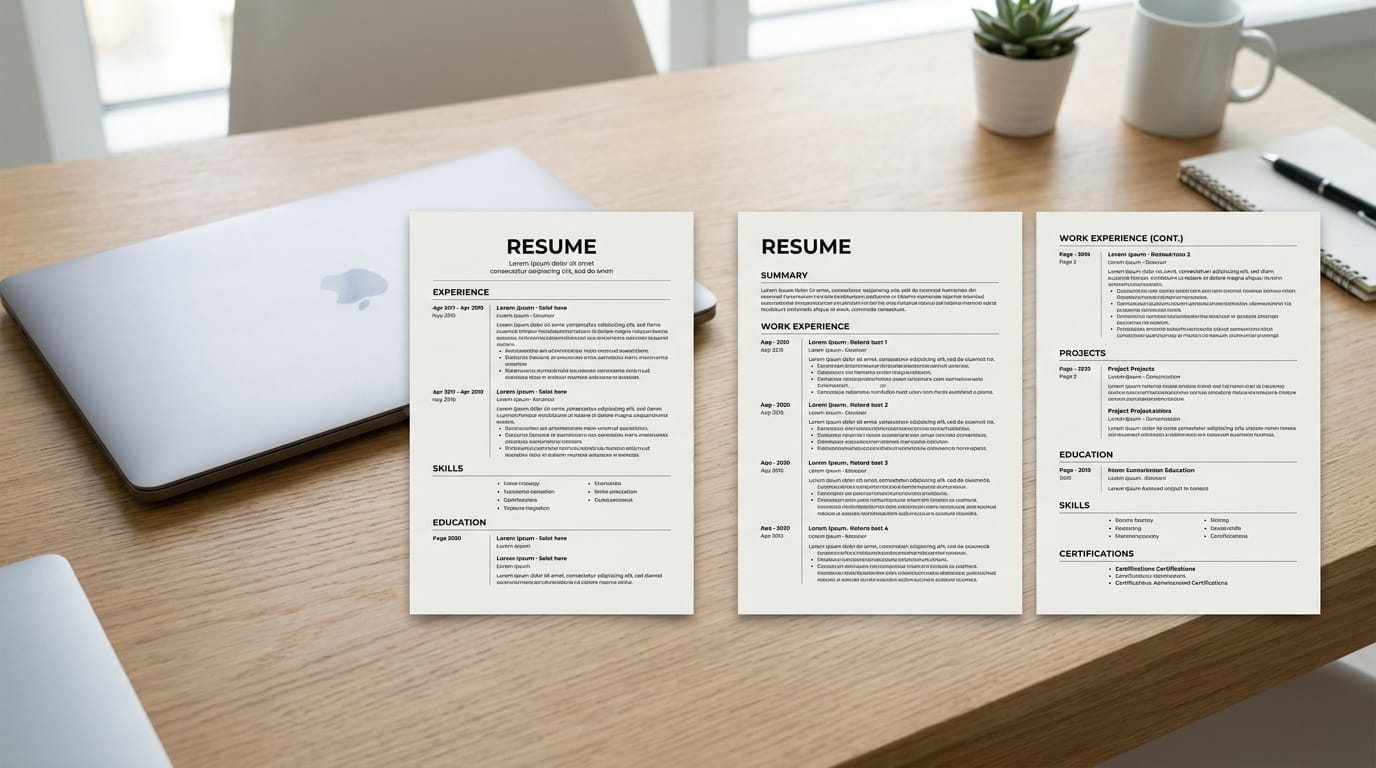
One of the most common questions job seekers ask is, "How long should a resume be?" While there isn't a one-size-fits-all answer, choosing the right resume length can influence how recruiters perceive your application.
Some candidates try to fit everything onto a single page, while others submit three- or four-page resumes filled with information that isn't relevant to the role. Neither approach is ideal.
In 2026, employers continue to prioritise resumes that are clear, concise, and tailored to the job. Hiring managers often spend only a short time reviewing each application, so your resume should highlight your most relevant qualifications without overwhelming the reader.
In this guide, you'll learn the ideal resume length, when a one-page or two-page resume is appropriate, common mistakes to avoid, and practical tips for keeping your resume focused and effective.
Why Resume Length Matters
Your resume isn't meant to tell your entire career story. Its purpose is to convince a recruiter that you're a strong candidate worth interviewing.
A resume that's too short may leave out important qualifications, while one that's too long can make it difficult for recruiters to identify your strongest skills and achievements.
According to the UC Berkeley Career Center guide, hiring teams heavily favor resumes that are organized, relevant, and hyper-tailored to the specific position rather than documents filled with unnecessary information.
The goal isn't to meet a specific page count, it's to include the information that best demonstrates you're qualified for the role.
How Long Should a Resume Be?
For most job seekers, the answer depends on their level of experience.
One Page
A one-page resume is generally the best choice if you are:
- A student or recent graduate.
- Applying for internships.
- An entry-level candidate.
- Someone with fewer than five years of relevant experience.
A one-page resume encourages you to focus on your most valuable qualifications instead of trying to include everything you've ever done.
If you're just starting your career, your resume should prioritise your education, relevant skills, internships, projects, certifications, and volunteer experience.
For additional guidance, read our article on Best Resume Format for Freshers in 2026, where we explain how to structure an entry-level resume that highlights your strengths.
Two Pages
A two-page resume is appropriate if you have several years of relevant professional experience or accomplishments that genuinely add value to your application.
This often includes:
- Mid-level professionals.
- Managers and team leaders.
- Technical specialists.
- Candidates with multiple relevant certifications or major projects.
If everything on the second page helps demonstrate your suitability for the role, there's no need to force your resume onto one page.
The key is relevance. Every section should support your application rather than simply increase the document's length.
Quality Matters More Than Length
Many job seekers worry about whether their resume is one page or two pages. In reality, recruiters care far more about the quality of the content than the number of pages.
A concise, well-organised two-page resume is often stronger than a crowded one-page resume with tiny fonts or missing information. Likewise, a focused one-page resume is far more effective than a lengthy document filled with unrelated experience.
The goal is to make it easy for recruiters to quickly identify why you're a strong fit for the role.
Can a Resume Be Three Pages?
In most cases, no.
A three-page resume is only appropriate if you have extensive, highly relevant experience, such as a senior executive, researcher, academic, or specialist with a long list of publications, certifications, or major projects.
For most professionals, including information that stretches beyond two pages often means your resume contains details that aren't essential to the role you're applying for.
Remember, recruiters are interested in your most relevant qualifications, not every responsibility you've held throughout your career.
Common Resume Length Mistakes
Keeping your resume concise isn't always easy. Here are some common mistakes that make resumes longer than they need to be.
Including Irrelevant Experience
Not every job you've held needs to appear on your resume. Focus on experience that relates to the position you're applying for or demonstrates transferable skills.
Listing Every Responsibility
Instead of writing a long list of daily tasks, highlight your achievements and measurable results wherever possible. Employers are more interested in the impact you made than a detailed description of routine responsibilities.
Repeating Information
Avoid repeating the same skills or accomplishments in multiple sections. Every line on your resume should add something new.
Using the Same Resume for Every Application
Sending the same resume to every employer often leads to unnecessary content. Tailoring your resume helps you remove information that isn't relevant while placing greater emphasis on the qualifications that matter most.
How to Keep Your Resume Concise
A well-written resume includes only the information that supports your application.
Here are a few ways to keep it focused:
- Tailor your resume to each job description.
- Prioritise recent and relevant experience.
- Use clear bullet points instead of long paragraphs.
- Quantify achievements whenever possible.
- Remove outdated or unrelated information.
- Keep your formatting clean and easy to read.
If you're creating a new resume or updating an existing one, Preplink.ai Resume Builder makes it easy to build a professional, ATS-friendly resume. You can also import your current resume and tailor it to a specific job description, helping you highlight the experience and skills that matter most for each application.
Before submitting your application, Preplink.ai Resume Scan reviews your resume, identifies areas for improvement, and provides practical feedback to help you strengthen your application.
Does Resume Length Affect ATS?
Many job seekers assume Applicant Tracking Systems (ATS) reject resumes simply because they're too long.
In reality, ATS software doesn't score your resume based on the number of pages. Instead, it looks for relevant information such as keywords, skills, qualifications, and work experience.
A concise, well-structured resume is still beneficial because it makes it easier for both ATS software and recruiters to identify your qualifications quickly. Rather than focusing on page count alone, make sure your resume is tailored to the job description and includes relevant keywords naturally.
Final Thoughts
So, how long should a resume be?
For most students, recent graduates, and entry-level professionals, a one-page resume is usually enough. As your career grows and you gain more relevant experience, a two-page resume can become the better choice.
Rather than trying to meet a specific page count, focus on creating a resume that's clear, relevant, and tailored to the role you're applying for. Every section should help demonstrate why you're the right candidate, and anything that doesn't add value can usually be removed.
Ultimately, the best resume isn't the longest or the shortest, it's the one that gives employers the information they need to confidently invite you for an interview.