
What Employers Can Verify on Your Resume During a Background Check
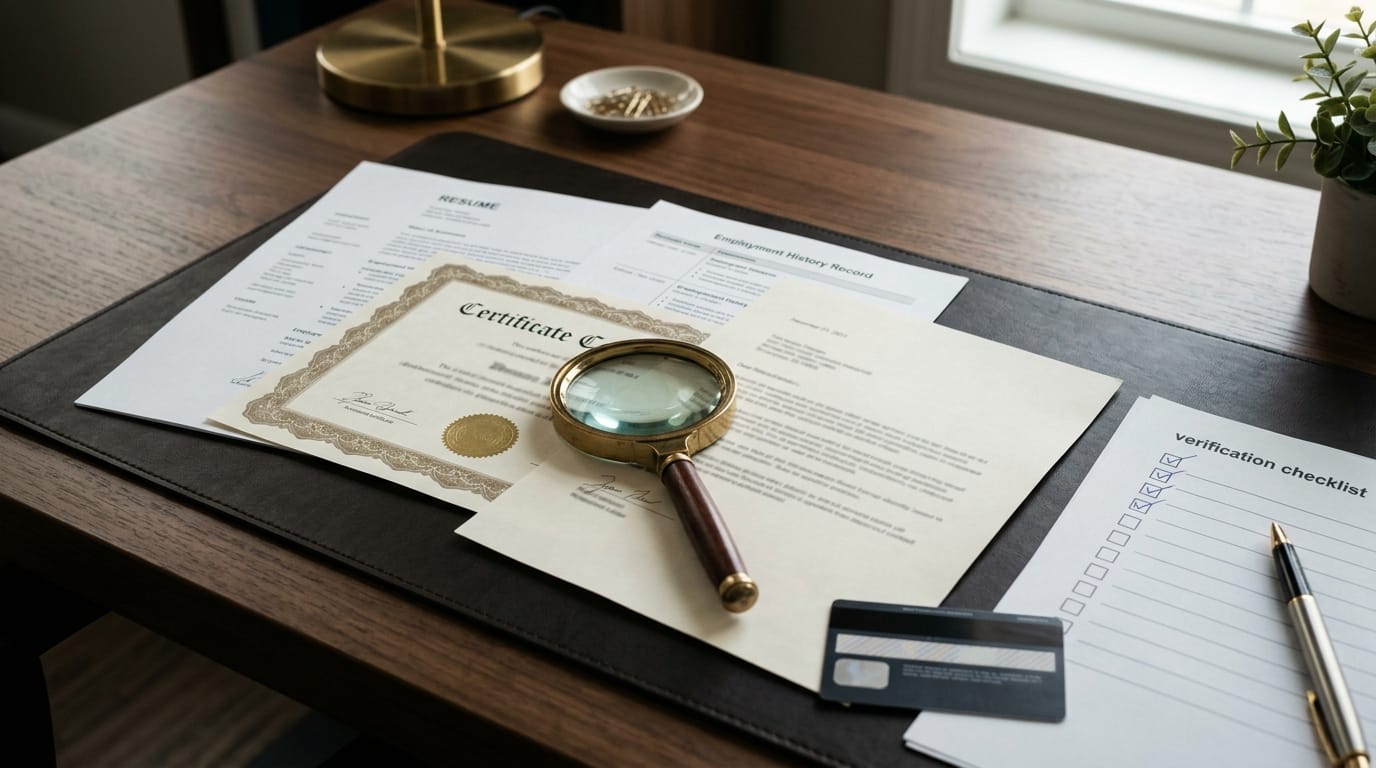
You have submitted your resume, completed an interview, and received positive feedback. Then the employer mentions a background check. Naturally, you may start wondering whether they will verify your employment history, check your qualifications, or discover discrepancies in the information you provided.
Employers may verify several details on your resume, but what they check depends on the position, the employer, the screening methods used, and the laws that apply. Some checks focus on employment dates and qualifications, while others may include criminal records, financial history, or additional background information.
Understanding what employers can verify can help you prepare accurate applications and address potential discrepancies before they become problems.
1. Can Employers Verify Your Previous Employment?
Yes. Employers may contact your previous employers or use an employment verification service to confirm information about your work history.
Depending on the verification process, they may check:
- The names of your previous employers.
- Your job titles.
- Your employment start and end dates.
- Whether you held the position you listed.
- Other employment details that the former employer is able or permitted to confirm.
For example, suppose your resume states that you worked as a Digital Marketing Specialist from January 2023 to December 2025. A prospective employer may ask your former employer to confirm your position and dates of employment.
If the dates differ from what you provided, the discrepancy may prompt questions.
However, there is no single universal employment database that every employer can access to see your complete work history. What an employer can establish depends on the verification methods used, the records available, and the information former employers provide.
If you have employment gaps, overlapping jobs, or dates you cannot remember precisely, review your records before applying. Correct genuine mistakes rather than inventing dates to make your work history appear continuous.
2. Can Employers Verify Your Education and Qualifications?
Yes. Employers may contact educational institutions or use credential verification services to confirm the qualifications listed on your resume.
Depending on the position and the verification process, they may check:
- The institution you attended.
- The degree or qualification you earned.
- Your graduation date.
- Professional certifications.
- Licences required to perform specific duties.
For example, if your resume states that you earned a bachelor's degree in computer science, an employer may ask the institution to confirm that you completed the qualification.
Some positions require specific academic or professional credentials. In these cases, verifying the qualification may be an important part of the hiring process.
Be accurate about your educational background. If you are still studying, state that your degree is in progress rather than implying that you have graduated. If you completed coursework without earning a degree, describe that experience honestly.
For guidance on presenting your education accurately, read Preplink.ai's guide on how to list education on a resume.
3. Can Employers Check Your Job Titles and Responsibilities?
Employers may verify your previous job titles and ask questions about the responsibilities and achievements you claim on your resume. However, confirming a job title is not the same as independently verifying every responsibility or achievement you list.
Consider this example.
Your resume says:
Digital Marketing Specialist — Managed SEO campaigns and increased organic website traffic by 40%.
An employer may confirm your job title and employment dates with your former employer. During an interview or reference check, they may also ask you to explain the SEO campaigns you managed and how you measured the reported increase.
If you contributed to a team project rather than managing the entire campaign, your resume should reflect that distinction.
When describing your experience, distinguish between work you personally completed, work you contributed to, and results achieved by the wider team. Be prepared to explain your contributions and support your claims with examples where possible.
For more guidance, read Preplink.ai's article on what to include in the work experience section of your resume.
4. Can Employers Discover False Information on Your Resume?
Potentially, yes. False or misleading information may come to light through employment verification, education checks, references, interviews, or other screening methods.
For example, an employer may discover a discrepancy if you:
- Claim a degree you never earned.
- List a job title you did not hold.
- Provide employment dates that do not match available records.
- Claim a professional certification you do not possess.
- Exaggerate your responsibilities or achievements.
Not every discrepancy means a candidate has deliberately misrepresented their background. Errors can result from incorrect records, misunderstandings about job titles, or confusion over employment dates.
If you notice an error in your resume after submitting an application, consider correcting it promptly and explaining the change clearly.
If an employer asks about a discrepancy, provide an honest explanation and supporting documentation where appropriate.
The aim is not to make your career history look perfect. It is to ensure that the information you provide accurately represents your qualifications and experience.
5. Can Employers Check More Than What's on Your Resume?
Yes. Depending on the position, employer, country, and applicable laws, a background check may cover information beyond your resume.
For example, an employer may conduct checks involving:
- Identity and work eligibility: To establish that you meet the applicable requirements for employment.
- Criminal records: Where permitted and relevant to the position.
- Driving records: Particularly for jobs that involve driving.
- Credit or financial history: For certain positions and where permitted by law.
- Public records: Depending on the screening process and applicable restrictions.
These checks are not automatically included in every background check.
For example, a role involving financial responsibilities may involve screening that would not be relevant to a position focused entirely on writing or graphic design.
It is also important to distinguish between information an employer can legally access and information it is permitted to use when making a hiring decision. Those rules vary by jurisdiction.
In the United States, the Federal Trade Commission's guidance on employer background checks and candidate rights explains the protections that apply when employers obtain reports from background reporting companies.
The specific requirements in other countries may differ, so check the rules that apply where you are applying for work.
6. What Should You Do Before a Background Check?
Reviewing your resume before an employer begins verification can help you identify mistakes and prepare for reasonable questions.
Use this checklist:
Check your employment history. Confirm that your employer names, job titles, and employment dates are accurate.
Review your education. Make sure your qualifications, institutions, and graduation dates are correctly stated.
Confirm your certifications. Check that any professional credentials you list are valid and that you meet the requirements for using them.
Review your achievements. Ensure that your resume accurately represents your responsibilities and results. Be prepared to explain how you achieved the outcomes you mention.
Prepare to explain discrepancies. If your records contain an error or your dates are approximate, gather any supporting documents you have and be ready to clarify the situation.
Correct mistakes honestly. If you discover that you have provided inaccurate information, address it rather than creating additional explanations to conceal the error.
For future applications, if you need to create a resume from scratch or tailor your existing resume to a specific job, Preplink.ai’s Resume Builder can help you build a resume that highlights your relevant skills, experience, and qualifications.
Final Thoughts
Employers may verify your employment history, education, job titles, certifications, and other information during the hiring process. The extent of these checks depends on the employer, the position, the available records, and the laws that apply.
The best way to prepare is to ensure that your resume accurately reflects your background. Review your employment dates, confirm your qualifications, and make sure you can explain the responsibilities and achievements you have listed.
You don't need a flawless career history to apply for a job. You need an honest and accurate account of the experience and qualifications you bring.