
How Many Skills Should You List on a Resume?
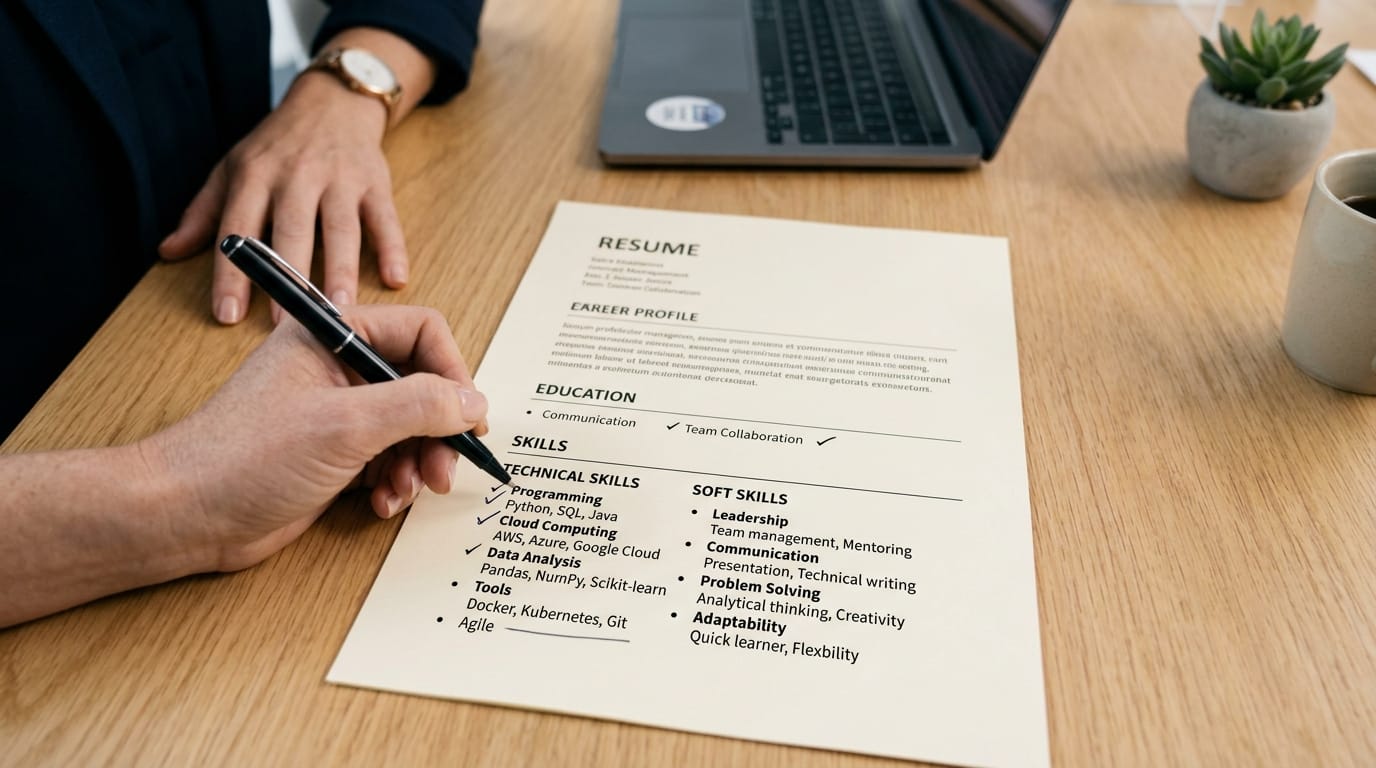
When writing a resume, one question comes up again and again:
How many skills should you list on a resume?
Some candidates include five skills, while others add twenty or more. But is there a right number?
The truth is that recruiters aren't looking for the longest skills section, they're looking for the most relevant one.
Listing too few skills may not fully showcase your qualifications, while listing too many can make your resume look unfocused or filled with keywords that don't relate to the role.
In this guide, you'll learn how many skills to include on your resume, which skills employers value most, and how to create a skills section that improves your chances of getting interviews.
Is There an Ideal Number of Skills?
There isn't a universal rule, but most career experts recommend listing between 8 and 15 relevant skills on your resume.
This gives you enough space to demonstrate your qualifications without overwhelming recruiters.
The exact number depends on:
- Your level of experience.
- The type of job you're applying for.
- The skills mentioned in the job description.
- Your industry.
For example, a software engineer may include more technical skills than someone applying for an administrative role.
The goal isn't to reach a specific number, it's to include the skills that best match the position.
Quality Matters More Than Quantity
Many job seekers believe that adding more skills makes their resume stronger.
In reality, recruiters pay far more attention to relevance than volume.
For example, if you're applying for a Digital Marketing role, skills like SEO, Google Analytics, content marketing, and email marketing will usually carry more weight than unrelated skills that don't support the position.
A focused skills section immediately tells employers that your experience aligns with the role they're hiring for.
Include Both Hard Skills and Soft Skills
A strong resume usually contains a balance of technical and workplace skills.
Hard skills are measurable abilities you've learned through education, training, or experience.
Examples include:
- Microsoft Excel
- Graphic design
- Data analysis
- Project management
- Search engine optimisation (SEO)
- Python
- Adobe Photoshop
Soft skills describe how you work with others and approach your responsibilities.
Examples include:
- Communication
- Problem-solving
- Leadership
- Time management
- Adaptability
- Teamwork
Employers often look for candidates who combine technical expertise with strong interpersonal skills.
Read Hard Skills vs Soft Skills: Which Matter More?
Choose Skills That Match the Job Description
One of the biggest resume mistakes is using the same skills section for every application.
Instead, carefully review the job description and identify the skills the employer mentions repeatedly.
If those skills genuinely reflect your experience, include them naturally throughout your resume.
Tailoring your skills section doesn't mean exaggerating your abilities, it means presenting the qualifications that are most relevant to the role.
According to Coursera's Guide on Featuring Key Skills, aligning your skills section directly with the job description helps recruiters quickly spot your relevant strengths and ensures your application stands out.
Should You Rate Your Skills?
Some candidates add star ratings or progress bars to show their skill level.
While these designs may look visually appealing, they often don't provide meaningful information to recruiters. One person's "5-star communication skills" may mean something completely different to another.
Instead of rating your skills, demonstrate them through your work experience and achievements.
For example, rather than simply listing Project Management, describe a project you successfully managed and the results you achieved.
Specific examples are far more convincing than self-assigned ratings.
Common Skills Section Mistakes
To make your resume stronger, avoid these common mistakes:
- Listing too many unrelated skills.
- Including skills you don't actually have.
- Using the same skills section for every application.
- Filling your resume with buzzwords but no evidence.
- Forgetting to update your skills as your experience grows.
A well-chosen skills section should support the rest of your resume, not repeat it.
Build a Skills Section That Matches the Role
Rather than trying to include every skill you've ever learned, focus on the ones that matter most for the position you're applying for.
If you're creating or updating your resume, Preplink.ai Resume Builder lets you build a resume from scratch or import your existing resume and tailor it to a specific job description. This makes it easier to highlight the most relevant skills for each application while keeping your resume professional and ATS-friendly.
Read our full guide on 50 ATS-Friendly Resume Skills to Help You Get More Interviews in 2026
Final Thoughts
So, how many skills should you list on a resume?
For most job seekers, 8 to 15 relevant skills is a good benchmark. More importantly, those skills should match the job description and accurately reflect your experience.
A carefully selected skills section is far more effective than a long list of unrelated abilities. By focusing on relevance, balancing hard and soft skills, and tailoring your resume for each opportunity, you'll give recruiters a clearer reason to move your application to the interview stage.