
Hard Skills vs Soft Skills: Which Matter More?
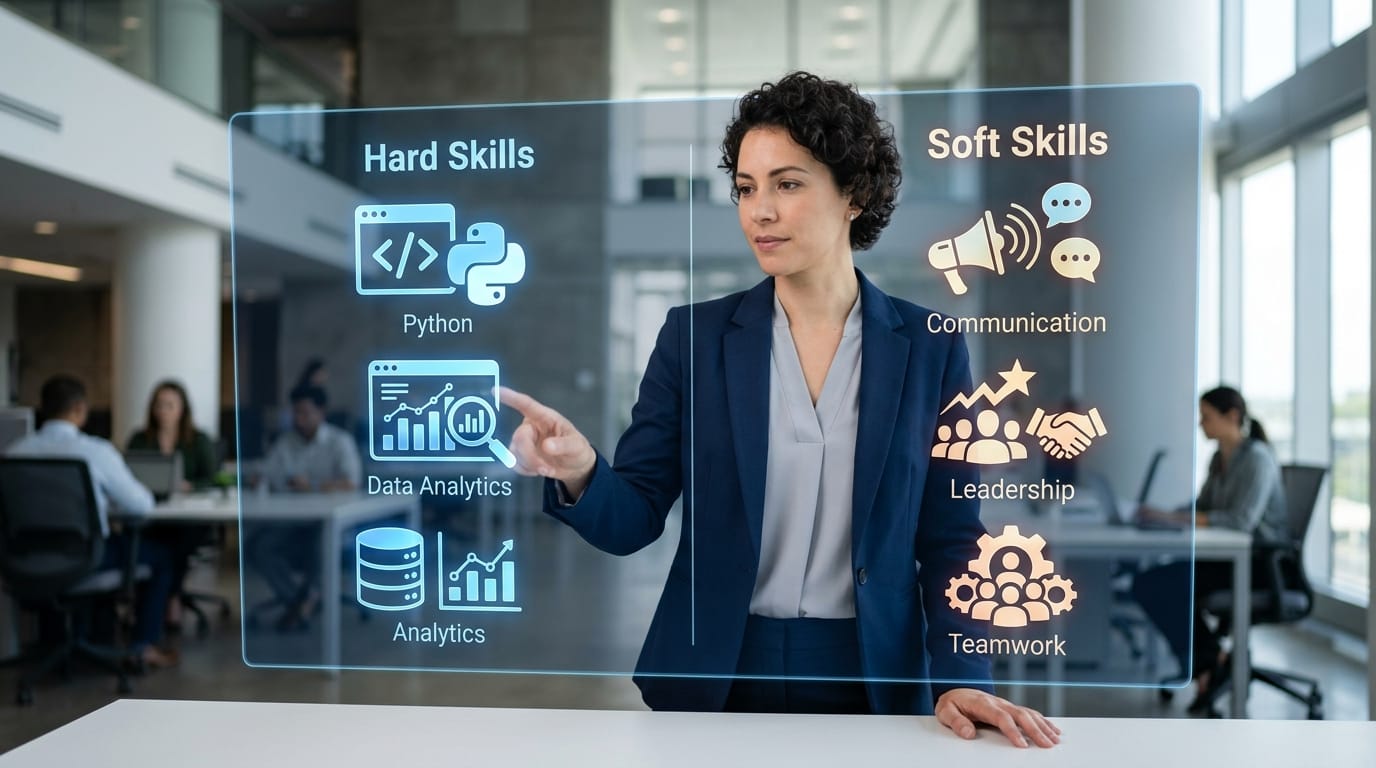
When applying for jobs, you've probably come across terms like hard skills and soft skills.
Recruiters often list both in job descriptions, interviewers ask about them during interviews, and resume experts encourage candidates to highlight them throughout their applications.
But which matters more?
Is it your technical expertise that gets you hired, or your ability to communicate, collaborate, and solve problems?
The truth is that employers aren't looking for one or the other. In today's competitive job market, the strongest candidates combine technical knowledge with interpersonal abilities that help them thrive in the workplace.
Understanding the difference between hard skills vs soft skills can help you build a stronger resume, prepare for interviews, and become a more competitive job candidate in 2026.
What Are Hard Skills?
Hard skills are measurable, job-specific abilities that you learn through education, training, certifications, or hands-on experience.
These are the skills that prove you can perform the technical aspects of a role.
Examples of hard skills include:
- Data analysis
- Python programming
- Microsoft Excel
- Graphic design
- Search Engine Optimization (SEO)
- Project management
- Financial reporting
- Accounting
- Copywriting
- Foreign language proficiency
For example, if you're applying for a software engineering role, employers may expect knowledge of programming languages like Java or Python. If you're applying for a marketing position, they may look for skills in SEO, Google Analytics, or content marketing.
Most hard skills can be tested through assessments, certifications, portfolios, or practical tasks.
What Are Soft Skills?
Soft skills are personal qualities that influence how you work and interact with others.
Unlike hard skills, they're not tied to a specific profession. Instead, they help you collaborate, communicate, adapt, and solve problems in almost any workplace.
Common soft skills include:
- Communication
- Teamwork
- Leadership
- Time management
- Adaptability
- Emotional intelligence
- Critical thinking
- Problem-solving
- Creativity
- Conflict resolution
For instance, two customer service representatives may have the same technical training, but the one with stronger communication and empathy is often better equipped to handle difficult customers and build positive relationships.
Soft skills are harder to measure, but they often have a significant impact on long-term career success.
Hard Skills vs Soft Skills: What's the Difference?
The biggest difference is how they're developed and applied.
Hard skills demonstrate what you can do, while soft skills demonstrate how you do it.
For example, knowing how to analyse data is a hard skill. Explaining those findings clearly to colleagues or clients is a soft skill.
Similarly, a project manager may understand project planning software, but without leadership, communication, and decision-making skills, managing a successful team becomes much more difficult.
Employers increasingly look for candidates who can combine both types of skills to deliver results.
Which Matter More in 2026?
If you had asked this question a decade ago, many employers would have prioritized technical expertise above everything else.
Today, the answer is more balanced.
As automation and artificial intelligence continue to transform workplaces, employers are placing greater value on human skills that technology cannot easily replace.
An assessment by the World Economic Forum highlights analytical thinking, resilience, leadership, and curiosity-driven lifelong learning as some of the fastest-growing skills employers want to see.
That doesn't mean hard skills have become less important.
Instead, employers want candidates who have the technical ability to perform the job and the soft skills needed to work effectively with others.
In other words, hard skills may help you get the interview, while soft skills often help you secure the job and grow within the company.
Examples of Hard Skills by Industry
Different industries require different technical abilities.
Information Technology
- Programming
- Cybersecurity
- Cloud Computing
- SQL
- Software Testing
Marketing
- SEO
- Content Marketing
- Google Analytics
- Email Marketing
- Social Media Management
Finance
- Financial Analysis
- Budgeting
- Forecasting
- Excel
- Risk Management
Healthcare
- Patient Care
- Medical Coding
- Electronic Health Records
- Clinical Procedures
- Medication Administration
Customer Service
- CRM Software
- Complaint Resolution Systems
- Order Processing
- Product Knowledge
- Documentation
Reviewing job descriptions in your chosen industry is one of the easiest ways to identify the hard skills employers expect.
Soft Skills Every Employer Looks For
While technical requirements vary between jobs, many soft skills are valuable across almost every profession.
Communication remains one of the most sought-after skills because employees regularly interact with colleagues, clients, and stakeholders.
Problem-solving is equally important, as employers value people who can think critically and find practical solutions.
Adaptability has also become increasingly valuable as workplaces continue to evolve through new technologies, hybrid working, and changing business priorities.
Other highly valued soft skills include:
- Leadership
- Collaboration
- Emotional intelligence
- Organisation
- Time management
- Initiative
These qualities help employees contribute beyond their technical responsibilities.
How to Showcase Hard Skills and Soft Skills on Your Resume
Simply listing skills isn't enough.
Recruiters want evidence that you've used those skills successfully.
Instead of writing:
- Communication
- Leadership
- Microsoft Excel
Support those skills with measurable achievements.
For example:
"Led a five-person project team that completed a client campaign two weeks ahead of schedule, improving customer satisfaction by 18%."
This single achievement demonstrates leadership, teamwork, communication, and project management without simply listing them.
Likewise, if you're claiming technical expertise, include examples of projects, certifications, or measurable results.
If you're unsure whether your resume highlights the right mix of hard and soft skills, Preplink.ai Resume Scan can review your resume, identify missing skills, and provide actionable recommendations to improve it before you apply.
Read How to Showcase In-Demand Skills on Your Resume in 2026
Demonstrating Skills During Interviews
Your resume introduces your skills, but interviews give you the opportunity to prove them.
When discussing your experience, use specific examples that explain:
- The situation
- The challenge
- The action you took
- The outcome
This approach helps interviewers understand not only what you know but also how you apply your skills in real-world situations.
For example, rather than saying you're a good communicator, describe a time you resolved a conflict within a team or presented a successful project to senior stakeholders.
Common Mistakes Candidates Make
One of the biggest mistakes is focusing only on technical skills.
Some candidates fill their resumes with software, tools, and certifications while overlooking communication, teamwork, and leadership.
Others make the opposite mistake by listing soft skills without providing evidence.
Claims like "excellent communication skills" or "strong leadership abilities" carry little weight unless they're supported by achievements.
Another common mistake is using the same resume for every application.
Different employers prioritize different skills, so tailoring your resume to match each job description can significantly improve your chances of getting noticed.
A well-structured resume also makes your skills easier for recruiters to identify. Preplink.ai Resume Builder helps you create a professional resume that highlights your strengths while following modern ATS-friendly formatting.
Final Thoughts
So, hard skills vs soft skills: which matter more?
The answer isn't choosing one over the other.
Hard skills demonstrate that you can perform the technical requirements of a role, while soft skills show employers how you'll collaborate, adapt, and contribute within the workplace.
In today's hiring market, employers are increasingly looking for candidates who combine both.
Investing in technical knowledge while continuously developing your communication, leadership, and problem-solving abilities will make you a stronger candidate, not just for your next job, but throughout your career.
The most successful professionals don't rely on hard skills or soft skills alone. They know how to balance both, and that's what sets them apart in 2026.