
When Is the Best Time to Apply for Jobs? A 2026 Hiring Calendar
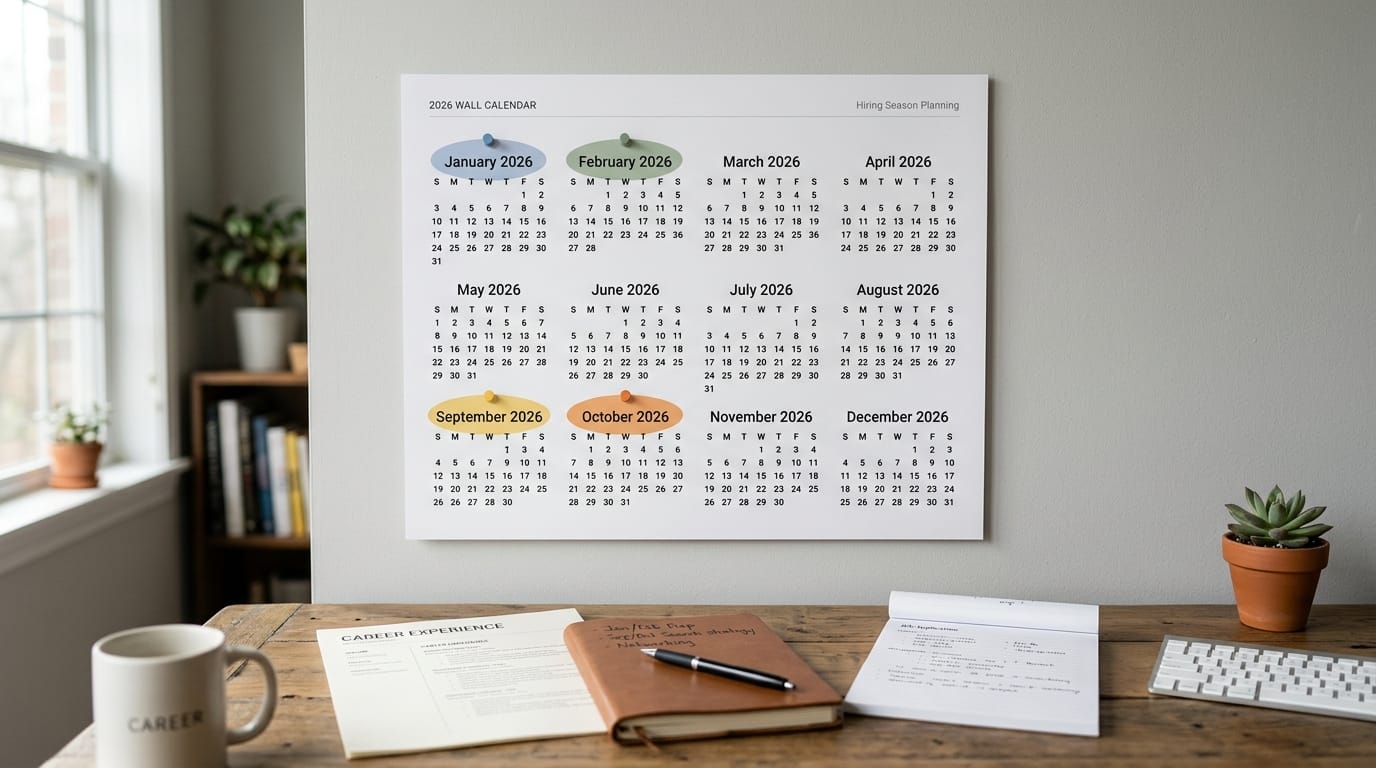
If you’re applying for jobs and wondering whether timing actually matters, the short answer is yes, but probably not in the way you think.
There are periods when companies tend to have more hiring activity, but there isn’t one magic month that guarantees interviews.
In 2026, January and February remain strong hiring months, while recent application data also points to September and October as particularly active months.
The key is knowing when hiring activity tends to increase, preparing before those periods arrive, and applying quickly when the right opportunity appears.
The Best Months to Apply for Jobs in 2026
Here’s a simple 2026 hiring calendar to help you plan your job search.
January–February: Strong Hiring Window
The beginning of the year is traditionally one of the strongest periods for job applications.
Companies may have new budgets, new hiring goals and positions that were approved as part of their plans for the year. Indeed identifies January and February as a particularly good period for job seekers.
However, don’t assume every company starts hiring immediately on January 1. Early January can still be slow while teams return from the holidays and finalize plans.
Best approach: Use early January to prepare, then increase your applications as hiring activity picks up later in the month and into February.
March–May: A Good Time to Keep Applying
Spring can also be a productive period, particularly for entry-level roles and industries that hire around graduation periods.
It’s also a useful time to keep your search active rather than waiting for another “perfect” hiring season.
If you find a relevant opening in March, April or May, apply. Don’t hold an application back simply because another month is supposedly better.
June–August: Don't Stop Your Job Search
Summer is often considered a slower period because employees and hiring teams may take vacations.
That can mean slower communication or longer hiring timelines in some companies. Indeed notes that July and August can be less active, although this varies significantly by industry.
For example, industries with seasonal hiring may actually become more active during summer.
So instead of stopping your job search, use these months strategically.
Use summer to:
- Improve your resume
- Build relevant skills
- Research companies
- Set up job alerts
- Apply for suitable openings
- Prepare for the stronger hiring period ahead
September–October: One of the Strongest Windows
If you're wondering what is the best month to apply for jobs in 2026, September and October deserve serious attention.
According to Indeed's guide to hiring seasons, early autumn marks a major recruitment surge as hiring managers return from summer breaks, re-evaluate end-of-year goals, and move urgently to fill open roles before the holiday season.
This makes sense: after the summer period, hiring teams are back, companies are reassessing their goals, and some employers want to fill positions before the final months of the year.
If you're job hunting in 2026, September and October should be on your radar.
November–December: More Mixed Results
Hiring can slow toward the end of the year as companies deal with budgets, holidays and year-end priorities.
December is generally one of the slower periods for job-search activity. Huntr found application volume was significantly below its yearly trend in December.
But that doesn't mean you should stop applying.
Some companies still have urgent vacancies, and fewer applicants can sometimes mean less competition.
So, When Should You Actually Apply?
If you want the simplest answer:
Best hiring windows to watch in 2026:
- January–February: Strong start-of-year hiring
- March–May: Consistent opportunities, especially in some entry-level markets
- September–October: Strong fall hiring activity
- November: Still worth applying, particularly to active openings
- December: Generally slower, but opportunities still exist
The bigger lesson is this: don't wait for the “perfect” month.
A great job posted today is more important than a theoretical hiring peak next month.
The Best Time to Apply Is Also Soon After a Job Is Posted
The month matters, but how quickly you apply can matter too.
Indeed recommends applying as soon as a relevant job becomes available because early applications may have an advantage before a large volume of candidates builds up.
Instead of checking job boards randomly, make your search more systematic.
Use Preplink.ai's Job Board to find relevant opportunities, then apply while the position is still fresh.
For repetitive applications, Preplink.ai's Auto-Apply feature can also help you move faster while maintaining a more consistent job-search routine.
Prepare Before the Hiring Season Starts
One mistake job seekers make is waiting until September or January to start preparing.
By then, you're competing with everyone else who just decided to update their resume.
A better strategy is to prepare before the hiring window.
Make sure your resume is ready, your LinkedIn profile is up to date, and you know which types of roles you're targeting.
You can use Preplink.ai's Resume Builder to create or improve your resume, then use Resume Scan to identify potential ATS issues before you start applying heavily.
That way, when the right job appears, you're ready to apply instead of spending three days fixing your resume.
Does the Day or Time You Apply Matter?
It can, but don't overthink it.
Some research suggests early-week applications can perform well, while applying soon after a position is posted may be more important than obsessing over a specific hour.
The practical rule is simple:
If you find a good job, don't wait just because it's Wednesday afternoon. Apply.
A strong, relevant application submitted promptly is usually better than a perfectly timed application submitted days later.
The Best Job-Search Strategy for 2026
Think of hiring seasons as opportunities to increase your activity, not deadlines to start looking for work.
Prepare before January and September. Stay active through spring and summer. Keep applying during slower periods when relevant jobs appear.
Most importantly, focus on the quality and relevance of your applications.
Timing can give you an advantage, but a weak resume won't become competitive simply because you submitted it in September.
Final Thoughts
So, what is the best time to apply for jobs?
For 2026, January–February and September–October are the key hiring windows to watch, with September and October standing out in recent application data.
But don't wait for those months to begin your search.
The best time to apply is when you find a role that genuinely matches your skills, especially when you can submit a strong application early.
Prepare early. Apply consistently. And when the right opportunity appears, don't wait.