How to Use AI to Practice Interview Questions in 2026
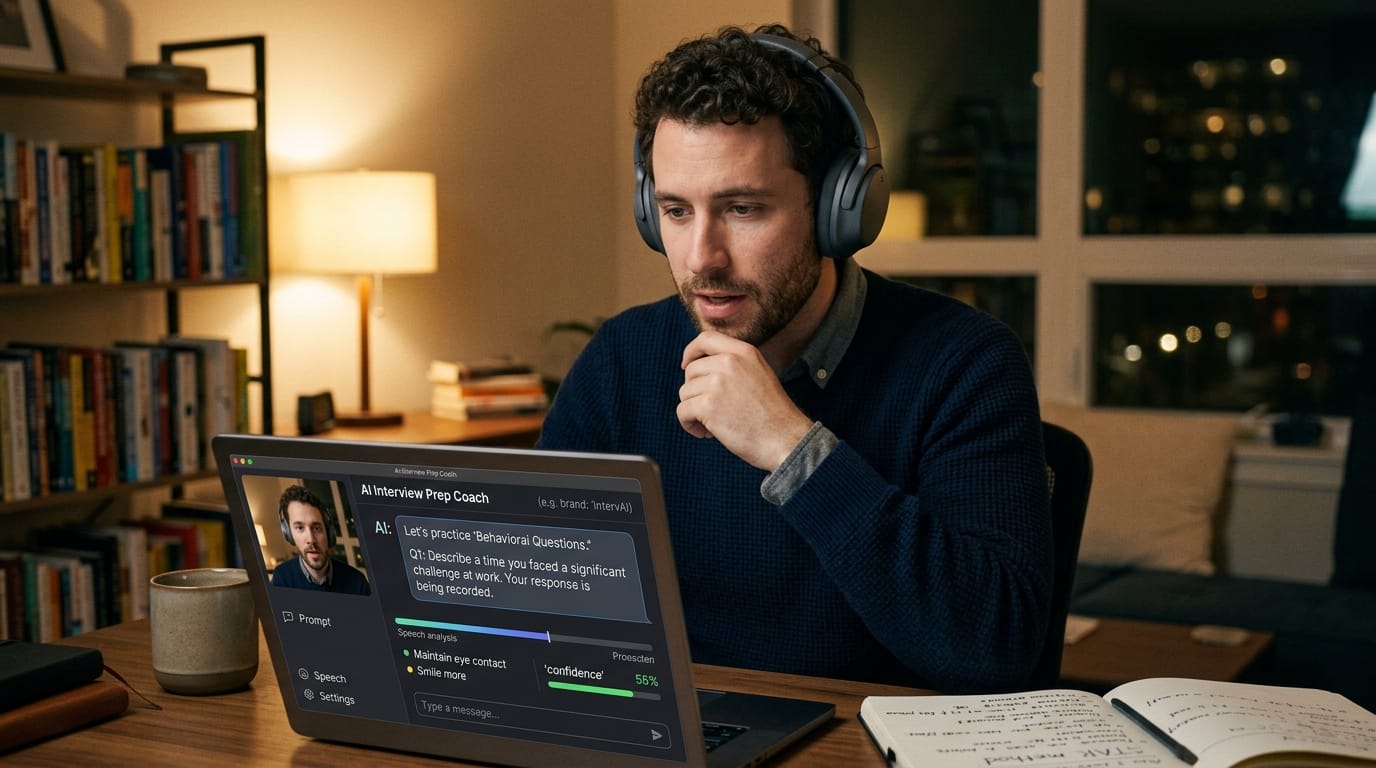
Interview preparation looks very different in 2026.
A few years ago, most candidates prepared by reading interview articles, watching YouTube videos, or memorizing answers from Google. Today, more job seekers are turning to AI-powered tools to practice interview questions in a more interactive and realistic way.
And honestly, it’s changing how people prepare.
AI tools now allow candidates to:
- Simulate interviews
- Practice answering questions out loud
- Receive feedback
- Improve communication skills
- Identify weak areas before the real interview
But while AI can make interview preparation more effective, it can also create problems when used the wrong way.
The key is learning how to use AI as a practice tool, not as a replacement for authentic communication.
Why Traditional Interview Prep Often Fails
One of the biggest reasons candidates struggle in interviews is because traditional preparation methods are too passive.
Most people prepare by:
- Reading sample answers
- Watching interview videos
- Memorizing responses silently
The problem is that interviews are live conversations, not written exams.
You may understand an answer in your head but still struggle to explain it clearly under pressure.
This is why many candidates:
- Freeze during interviews
- Ramble when answering questions
- Forget key points
- Sound less confident than they expected
According to Indeed’s Interview Practice Guide, reviewing answers silently in your head doesn't translate to a live conversation. To prevent freezing or rambling under pressure, candidates must shift to active, verbal practice and simulated mock interviews to build real muscle memory.
The issue with traditional prep is simple:
It rarely simulates real interview pressure.
How AI Interview Practice Works
AI interview tools are designed to make preparation more interactive.
Instead of passively reading questions, candidates can now:
- Answer questions in real time
- Practice role-specific interviews
- Receive structured feedback
- Improve communication patterns
- Repeat difficult questions multiple times
Some AI tools even analyze:
- Clarity
- Pacing
- Confidence
- Filler words
- Response structure
This creates a feedback loop that traditional interview preparation usually lacks.
For example, if your answers are too long or unclear, AI systems can help point that out quickly so you can improve before the actual interview.
Best AI Tools for Practicing Interview Questions
Not every AI interview tool works the same way.
Some focus only on generating questions, while others simulate realistic interview experiences.
One useful option for candidates preparing for interviews is Preplink.ai Mock Interview.
Instead of simply showing generic interview questions, it helps candidates practice in a more realistic environment where they can improve:
- Communication
- Confidence
- Answer structure
- Delivery under pressure
This matters because interviews are not just about knowing answers. They are also about how clearly and confidently you communicate them.
The best AI interview tools usually help candidates:
- Practice consistently
- Identify weak areas
- Structure responses better
- Feel more prepared before interviews
Practicing Behavioral Interview Questions With AI
Behavioral interview questions are one of the hardest parts of interviewing for many candidates.
Questions like:
- “Tell me about a time you solved a problem”
- “Describe a challenge you faced”
- “Tell me about a conflict at work”
often require structured storytelling under pressure.
This is where AI becomes especially useful.
AI tools can help candidates:
- Organize thoughts clearly
- Structure answers logically
- Improve storytelling flow
- Avoid rambling
Many candidates use frameworks like:
- Situation
- Task
- Action
- Result (STAR)
to make their responses easier to follow.
Practicing behavioral questions repeatedly also helps reduce nervousness because candidates become more familiar with explaining their experiences naturally.
Read The 10 Common Behavioral Interview Questions (2026 Guide)
How to Get Feedback on Your Answers
One major advantage AI provides is instant feedback.
Traditionally, candidates had no easy way to know:
- If their answers sounded clear
- Whether they were over explaining
- If they sounded confident
- Whether their examples made sense
AI interview practice changes that.
Instead of guessing, candidates can now identify problems faster.
Common issues AI tools often reveal include:
- Vague answers
- Weak examples
- Poor structure
- Repetitive wording
- Lack of measurable results
This type of feedback is important because improvement comes from correction, not just repetition.
Candidates who also struggle with explaining resume experience clearly may benefit from tools like Preplink.ai Resume Scan, which helps identify unclear phrasing and weak achievement descriptions that could later affect interview performance.
Mistakes to Avoid When Using AI
AI can improve interview preparation, but many candidates misuse it.
One of the biggest mistakes is copying AI-generated answers word-for-word.
This usually creates responses that sound:
- Robotic
- Unnatural
- Overly polished
- Emotionally disconnected
Recruiters can often tell when answers sound memorized instead of genuine.
Another mistake is depending entirely on AI without practicing real communication.
AI should help you:
- Structure ideas
- Practice consistently
- Improve clarity
But your actual personality, experience, and communication style still matter most.
The goal is not to sound like AI. The goal is to sound more confident and prepared.
Can AI Actually Improve Interview Confidence?
In many cases, yes.
Confidence usually comes from familiarity and repetition. According to a guide on performance psychology by Drexel University, passive preparation fails because it doesn't simulate real-world conditions. To prevent communication freezes or rambling under pressure, candidates must shift to active, verbal repetition to build the natural confidence needed for high-stakes interviews.
The more candidates practice:
- Answering difficult questions
- Speaking under pressure
- Explaining achievements clearly
the more comfortable interviews start to feel.
AI helps by creating a low-pressure environment where candidates can practice repeatedly without fear of judgment.
This is especially helpful for:
- First-time job seekers
- Introverted candidates
- Remote job applicants
- People returning to the workforce
- Candidates preparing for high-stakes interviews
Over time, repeated practice helps reduce anxiety and improve communication flow naturally.
Final Thoughts
AI is changing how candidates prepare for interviews in 2026.
Instead of relying only on passive preparation methods, job seekers now have access to tools that allow them to practice interviews in a more interactive and realistic way.
But the most effective candidates understand something important:
AI works best as a preparation partner, not a replacement for authentic communication.
The goal is not to memorize perfect answers.
The goal is to become more comfortable:
- Thinking under pressure
- Communicating clearly
- Explaining experiences naturally
- And showing confidence during interviews
And when used properly, AI can make that process much easier.