
How Long Do Employers Spend Reviewing a Resume?
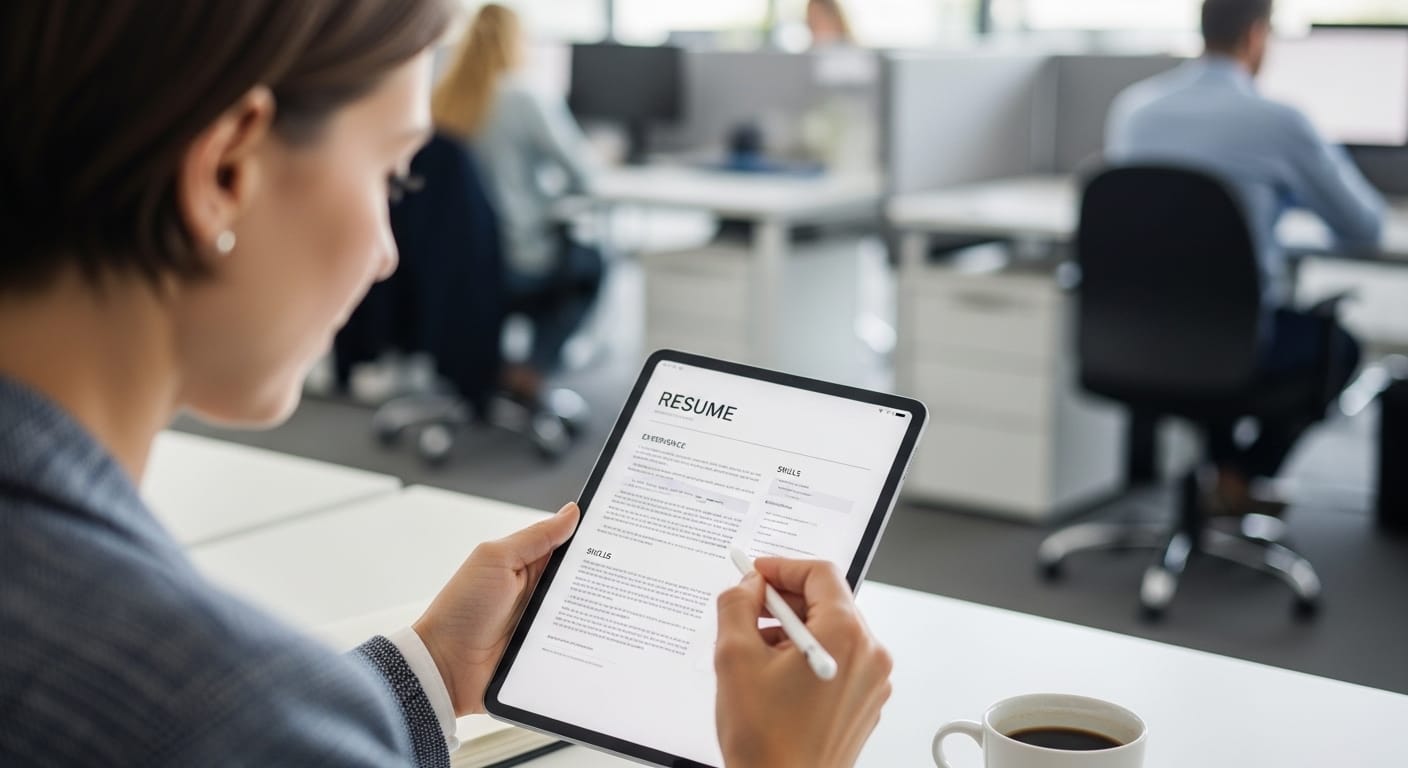
If you’ve ever submitted a job application and wondered whether anyone truly read your resume, you’re not alone.
One of the most common questions job seekers ask is: How long do employers spend reviewing a resume?
The honest answer might surprise you.
On average, recruiters spend 6 to 10 seconds scanning a resume during the first review. That’s not a myth. Multiple hiring studies over the years have confirmed that initial resume screening is extremely fast.
In 2026, with remote hiring, global applicants, and AI-powered filtering tools, the first review is often even shorter.
This article explains:
- How long recruiters look at resumes
- Why resume review time is so short
- What employers actually look for
- How to make sure your resume survives those first 10 seconds
How Long Do Recruiters Look at a Resume in 2026?
Most recruiters spend between 6 and 15 seconds on the initial resume scan.
Here’s what typically happens:
- The recruiter opens the resume
- They scan key sections quickly
- They decide whether to continue reading or move on
If the resume does not clearly show relevance within seconds, it often gets rejected.
For roles that receive hundreds of applications, the screening time can be even shorter.
Why Is Resume Review Time So Short?
There are three main reasons.
1. High Application Volume
Remote jobs attract applicants from around the world. A single job posting can receive hundreds or even thousands of applications.
Recruiters simply do not have the time to read every resume in detail.
2. Applicant Tracking Systems (ATS)
Before a human even sees your resume, it often passes through an Applicant Tracking System.
If your resume does not match job keywords, it may never reach a recruiter.
3. Pattern Recognition
Experienced recruiters quickly recognize patterns. Within seconds, they can tell whether:
- The candidate has relevant experience
- The job titles match the role
- The formatting is clear
- The resume looks professional
They are not reading every word. They are scanning for signals.
What Do Employers Look at First?
When employers review resumes quickly, they focus on specific areas.
1. Job Title
They check if your most recent job title aligns with the position.
For example, if the role is “Digital Marketing Manager” and your latest title is “Marketing Assistant,” they immediately assess relevance.
2. Years of Experience
Recruiters look for clear evidence that you meet minimum experience requirements.
If the job requires five years of experience and your resume shows one, it may not move forward.
3. Skills Section
Keywords matter. Recruiters scan for skills that match the job description.
4. Company Names
Recognizable companies can create credibility quickly.
5. Formatting
If the resume is cluttered, hard to read, or poorly structured, it may be rejected instantly.
The Two Phases of Resume Review
Understanding resume review time requires knowing that there are usually two stages.
Phase 1: The Quick Scan (6–15 seconds)
This is the elimination stage. The recruiter checks for relevance.
Phase 2: The Deeper Review (1–3 minutes)
If your resume passes the first scan, the recruiter may read it more carefully.
At this stage, they look at:
- Achievements
- Metrics
- Career progression
- Stability
Only a small percentage of resumes reach this stage.
How to Survive the First 10 Seconds
If recruiters spend only a few seconds reviewing resumes, your document must communicate value instantly.
Here’s how to do that.
1. Use a Clear Professional Summary
Your summary should state:
- Your job title
- Years of experience
- Key expertise
- Industry focus
Keep it short and specific.
2. Match the Job Description
Mirror important keywords from the job posting.
If the role requires “project management” and “budget planning,” those exact terms should appear naturally in your resume.
3. Focus on Results, Not Duties
Recruiters care more about impact than responsibilities.
Instead of:“Responsible for managing social media accounts”
Write:“Increased social media engagement by 45 percent in six months”
Numbers stand out quickly.
4. Keep It Clean and Simple
Avoid:
- Complex graphics
- Fancy fonts
- Long paragraphs
- Unnecessary personal details
Simple formatting improves both ATS compatibility and human readability.
Does Resume Length Affect Review Time?
Yes.
If your resume is too long, recruiters may not read beyond the first page.
For most professionals:
- 1 page is ideal for entry-level candidates
- 1–2 pages work for experienced professionals
Long resumes can dilute impact.
Remember, recruiters are scanning, not reading a novel.
How AI Has Changed Resume Screening
In 2026, AI plays a larger role in hiring than ever before.
AI tools:
- Scan resumes for keywords
- Score candidate relevance
- Rank applications
- Highlight top matches
This means your resume must be optimized for both machines and humans.
To succeed:
- Use standard section headings
- Include relevant keywords
- Avoid text inside images
- Save as PDF unless stated otherwise
If your resume fails ATS screening, it may never reach a recruiter.
Common Resume Mistakes That Lead to Instant Rejection
Here are some common reasons resumes get rejected within seconds:
- No clear job title alignment
- No measurable achievements
- Spelling or grammar errors
- Generic resume used for every application
- Irrelevant experience dominating the page
- Poor formatting
Each of these reduces your chances during the first scan.
How to Make Your Resume Stand Out Fast
If you want recruiters to spend more than 10 seconds on your resume, focus on clarity and relevance.
Here is a practical checklist:
✔ Clear headline or professional title✔ Targeted summary✔ Bullet points with measurable achievements✔ Keywords from the job description✔ Logical structure✔ Professional formatting✔ No unnecessary details
Your resume should answer this question immediately:“Why should we interview this person?”
The Reality of Modern Job Searching
Many candidates assume they are rejected because they are not qualified.
In reality, many are rejected because their resume does not communicate value quickly enough.
Hiring is competitive. Attention spans are short. Resume review time is limited.
Understanding this helps you approach your job search strategically rather than emotionally.
How to Increase Your Interview Chances
If employers spend only seconds reviewing resumes, you must:
- Customize every application
- Use role-specific keywords
- Highlight measurable results
- Keep formatting clean
- Prepare for ATS screening
Small improvements can significantly increase interview callbacks.
Final Thoughts
So, how long do employers spend reviewing a resume?
Usually less than 15 seconds during the initial screening.
That may sound discouraging, but it’s actually empowering. When you understand how recruiters review resumes, you can design yours to survive the scan.
In today’s job market, success depends on clarity, relevance, and strategy.
Your resume is not just a document. It is a marketing tool.
Make every second count.