
Difference Between a CV and a Résumé: A Complete Guide for Job Seekers
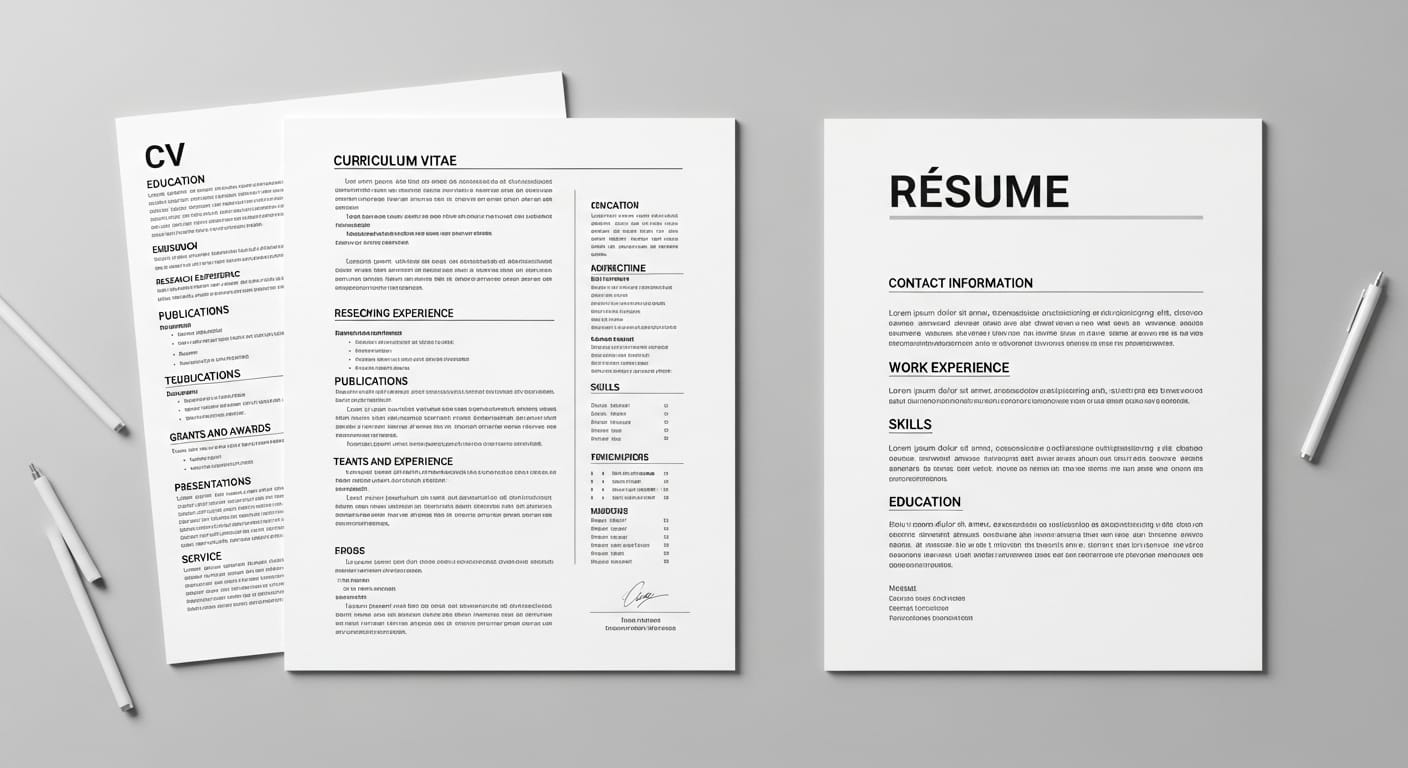
Many job seekers use the terms CV and résumé as if they mean the same thing. While both documents are used when applying for jobs, they serve different purposes and are used in different contexts. Understanding the difference between a CV and a résumé can directly affect your chances of getting shortlisted.
In 2026, hiring is more global than ever. People apply for jobs across countries, remotely, and through automated systems. Using the wrong document, or formatting it incorrectly, can lead to instant rejection even if you are qualified.
This guide explains the difference between a CV and a résumé in detail, when to use each one, how recruiters view them, and how to choose the right option for your job search.
What Is a Résumé?
A résumé is a short, targeted summary of your professional experience, skills, and achievements. Its main purpose is to show a recruiter, as quickly as possible, why you are a good fit for a specific role.
Key characteristics of a résumé:
- Typically one page, sometimes two for experienced professionals
- Focuses on relevant work experience and skills
- Tailored to each job application
- Written to be scanned quickly
Recruiters often spend 6–10 seconds reviewing a résumé. Because of this, clarity and relevance are more important than detail.
A résumé answers one main question:
“Why should we consider this candidate for this role?”
What Is a CV?
A CV, short for Curriculum Vitae, is a detailed record of your academic and professional background. It provides a full overview of your education, experience, and achievements.
Key characteristics of a CV:
- Usually two pages or more
- Includes academic history, certifications, publications, and research
- Updated regularly but not tailored for each role
- More detailed and comprehensive
CVs are commonly used in academic, research, medical, and teaching roles. They are also the standard document in many countries outside North America.
A CV answers a different question:
“What is the full history of this candidate’s education and career?”
Core Differences Between a CV and a Résumé
1. Length and Detail
The most obvious difference is length.
- A résumé is short and concise
- A CV is long and detailed
Résumés remove anything that is not relevant to the job. CVs include nearly everything related to your academic and professional life.
2. Purpose
The purpose of a résumé is to:
- Highlight your most relevant experience
- Show immediate value
- Secure an interview
The purpose of a CV is to:
- Document your career journey
- Show academic depth and credibility
- Support long-term evaluation
3. Customisation
Résumés are customised for every job application. You may change:
- Keywords
- Skills emphasis
- Work experience descriptions
CVs are not heavily customised. They are updated over time as you gain more experience or credentials.
4. Geographic Usage
Geography plays a major role in deciding which document to use.
- United States and Canada: Résumés are standard
- UK, Europe, Africa, Asia: CVs are commonly requested
- Remote roles: Usually require résumés unless stated otherwise
Always check the job description carefully.
5. Content Focus
A résumé focuses on:
- Skills
- Results
- Achievements
- Work experience
A CV includes:
- Education history
- Research and publications
- Certifications
- Conferences and training
- Professional memberships
When Should You Use a Résumé?
You should use a résumé when:
- Applying for private-sector or corporate jobs
- Applying for tech, marketing, finance, or business roles
- Applying through job portals and ATS systems
- Applying for remote roles
Most modern companies expect résumés, not CVs.
When Should You Use a CV?
You should use a CV when:
- Applying for academic, teaching, or research roles
- Applying for medical or scientific positions
- Applying for roles outside North America that request a CV
- Applying for grants, fellowships, or doctoral programs
If a job posting specifically asks for a CV, always provide one.
CV vs Résumé in ATS Screening
Most companies today use Applicant Tracking Systems (ATS) to filter applications.
ATS systems are designed primarily for résumés because they:
- Are structured
- Are keyword-focused
- Are easy to scan
Long CVs can confuse ATS systems unless they are specifically requested.
This is why many job seekers struggle. They submit a long CV to an ATS system designed for résumés and get rejected automatically.
Using tools like Preplink.ai’s Resume Builder helps job seekers create ATS-optimised résumés that match job descriptions and pass automated screening.
Common Mistakes Job Seekers Make
Many candidates lose opportunities due to simple mistakes.
Common errors include:
- Using a CV when a résumé is required
- Submitting a résumé for academic roles that need a CV
- Sending the same document to every job
- Ignoring country-specific expectations
These mistakes are avoidable with proper understanding.
How to Decide Between a CV and a Résumé
Before applying, ask yourself:
- What document does the employer request?
- What country is the role based in?
- Is the role academic or corporate?
- Is the application processed through an ATS?
If the employer does not specify, a résumé is usually the safer option for corporate roles.
How CVs and Résumés Affect Interviews
Your application document shapes the interview.
A résumé leads to:
- Skill-based interviews
- Role-specific questions
- Performance-focused discussions
A CV leads to:
- Academic or research discussions
- Detailed background questions
- Long-term evaluation
Preparing for interviews using the same structure as your document improves confidence and clarity.
Platforms like Preplink.ai help candidates practise interviews based on their résumés, ensuring consistency between application and interview performance.
Global Hiring and Remote Work Considerations
With global and remote hiring increasing, employers often receive applications from different countries.
This makes clarity critical.
A recruiter may reject a candidate simply because:
- The document format is unfamiliar
- The content is too long
- The focus does not match the role
Choosing the right document helps recruiters understand you faster.
Final Thoughts
The difference between a CV and a résumé goes beyond terminology. It affects how recruiters perceive you and whether your application moves forward.
In 2026, job seekers must be intentional. Using the right document for the right role shows professionalism, awareness, and readiness.
If you are unsure, review the job description carefully and choose the document that aligns with the role and hiring system.